What Chemicals Are in Furniture and Are They Harmful?

Furniture can contain chemicals because manufacturers use them to bind wood, protect surfaces, soften foam, resist stains, and improve durability.
Risk depends more on the material, treatment, and overall construction of the furniture, but some chemicals deserve closer review because they can release into indoor air or collect in household dust.
For example, the CDC notes that formaldehyde levels can be higher in homes with new manufactured wood products, including furniture.
This guide explains the most common chemicals found in furniture, where they show up, and how to choose safer options with more confidence.
Furniture can contain harmful chemicals, but the risk depends on the material and treatment used.
Common chemicals include VOCs, formaldehyde, PFAS, flame retardants, solvents, and plasticizers, often found in finishes, pressed wood, foam, and treated fabrics.
For shoppers, the safest approach is to choose furniture with clear material labels, PFAS-free fabrics, certified foam, low-VOC finishes, little to no strong odor, and trusted certifications like GREENGUARD Gold, OEKO-TEX, FSC, and CertiPUR-US.
Why Furniture Has Chemicals

Furniture often contains chemicals because it has to do more than look nice. It needs to hold its shape, resist wear, support weight, and survive daily use.
Manufacturers may use chemicals to:
- Bond wood pieces together
- Protect surfaces from stains or water
- Make foam soft and flexible
- Help fabrics resist spills
- Add color, shine, or texture
- Improve durability during shipping and use
At The Goodness Well, we look at furniture chemicals by asking what they do, where they are used, and whether they can enter your home environment.
The main issue is exposure. Some chemicals stay mostly locked into the material. Others can move into indoor air, settle into dust, or transfer through regular contact.
A chemical does not always stay fixed inside a product. Some chemicals can slowly leave materials over time during regular use.
Research on upholstered furniture has measured chemical exposure through air, dust, and surface contact, especially with furniture that contains foam or added flame retardants.
This does not mean every chemical in furniture is dangerous. It means shoppers should look more closely when a product has:
- A strong chemical smell
- Vague material labels
- Treated fabric with no explanation
- Pressed wood with no emission details
- Foam with no certification or additive information
The goal is not to avoid every chemical. The goal is to choose furniture with clearer materials, fewer hidden treatments, and better testing when possible.
VOCs and Off-Gassing
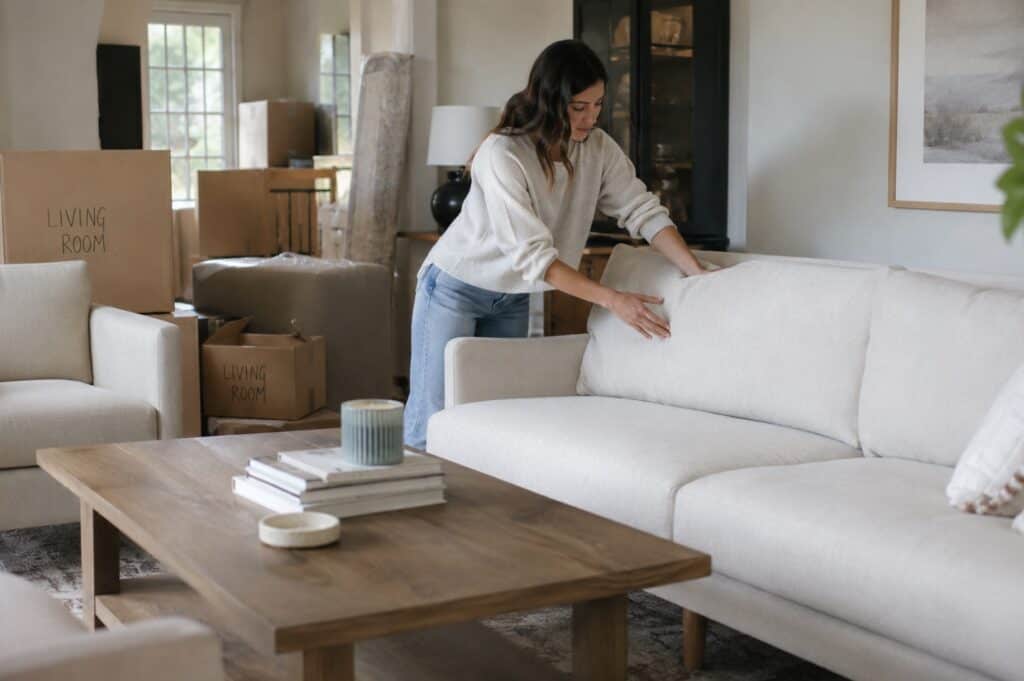
VOCs are chemicals that turn into gases at room temperature. Off-gassing is the release of those gases from a product into the air.
With furniture, VOCs can come from:
- Paints
- Stains
- Sealants
- Adhesives
- Composite wood
- Foam
- Fabric coatings
New furniture often releases the strongest odor during the first days or weeks after unboxing. Heat, humidity, and poor ventilation can make the smell stronger.
Unbox strong-smelling furniture in a ventilated space and let it air out before placing it in a bedroom or nursery.
A chemical smell does not tell you exactly which VOC is present. It only tells you the furniture is releasing something into the air.
Some VOCs can irritate the eyes, nose, throat, or lungs in sensitive people.
A review of wood products and indoor air found that wood materials, coatings, and adhesives can release VOCs indoors, especially in newer or recently finished products (PMC).
This matters most when new furniture goes into a small room, bedroom, nursery, or home office. These spaces often have less airflow and longer daily use.
To reduce VOC exposure from new furniture:
- Unbox it outside or in a ventilated room
- Remove plastic packaging quickly
- Open windows when possible
- Let strong-smelling pieces air out before bedroom use
- Choose low-VOC or GREENGUARD Gold certified products when available
Key Takeaway: Fresh air, time, and low-emission labels are the simplest ways to reduce new-furniture VOC exposure.
REAL-LIFE EXAMPLE

You order a new desk, and the room smells sharp after assembly. That smell means the desk is releasing VOCs from materials, adhesives, or finishes. Speed up off gassing by opening windows before using it daily, and check future product pages for low-VOC or emission-tested labels.
Formaldehyde in Furniture

Formaldehyde is one of the most talked-about furniture chemicals. It is used in some adhesives and resins that hold wood-based products together.
In furniture, formaldehyde is most often connected to pressed wood products, such as:
- Particle board
- MDF
- Plywood
- Composite wood
- Veneered furniture
- Some glues and adhesives
These materials are common in dressers, bookshelves, desks, bed frames, cabinets, and budget-friendly furniture.
Some are made to meet stricter emissions limits, while others give shoppers very little information.
Formaldehyde matters because it can leave certain pressed wood products as a gas and enter indoor air.
Formaldehyde is one reason new composite wood furniture may smell stronger in small or poorly ventilated rooms.
The EPA explains that formaldehyde can cause irritation and that pressed-wood products are a common indoor source.
The safest shopping move is to avoid vague labels. Words like “manufactured wood” or “wood product” do not tell you enough.
Look for clearer details, such as:
- Solid wood
- No-added-formaldehyde wood
- Ultra-low-emitting formaldehyde materials
- CARB Phase 2 compliant composite wood
- TSCA Title VI compliant composite wood
- GREENGUARD Gold certified furniture
When shopping for MDF, particle board, or plywood furniture, look for CARB Phase 2, TSCA Title VI, or GREENGUARD Gold details.
Certified low-emission composite wood is usually a better choice than pressed wood with no emissions information.
Formaldehyde exposure matters most with new pressed-wood furniture in small or poorly ventilated rooms.
Bedrooms, nurseries, and home offices deserve closer review because people spend longer periods there.
If you already bought a pressed-wood piece, place it in a ventilated area before daily use. Open drawers and cabinet doors while it airs out.
This helps reduce trapped odor before the furniture moves into a bedroom or nursery.
PFAS and Fabric Treatments

PFAS are a large group of chemicals sometimes used to make materials resist stains, water, and grease. In furniture, they are most relevant to treated fabrics.
PFAS may be used on:
- Upholstered sofas
- Dining chairs
- Performance fabrics
- Water-repellent textiles
- Stain-resistant cushions
- Removable fabric covers
These treatments are used because they make spills bead up on the surface. That can be helpful for busy homes with kids, pets, or frequent meals on upholstered chairs.
A fabric that repels water or stains may use a chemical treatment, so the treatment details matter.
The tradeoff is that some PFAS break down very slowly. They can remain in the environment and build up in people over time.
The NIH states that exposure to certain PFAS has been connected to health concerns, including immune system effects and increased cholesterol.
For furniture shoppers, the key label to question is “performance fabric.” This term usually means the fabric is designed to resist stains, moisture, or heavy wear.
Be more careful when a product page says:
- Stain-resistant
- Water-repellent
- Spill-proof
- Easy-clean
- Performance fabric
- Soil-resistant
These phrases describe what the fabric does. They do not always tell you what treatment was used.
Better fabric choices include:
- Untreated cotton
- Linen
- Wool
- Hemp
- PFAS-free performance fabric
- OEKO-TEX certified textiles
- GREENGUARD Gold certified furniture
A PFAS-free label is helpful, but still check the full product. The frame, cushion fill, backing, and finish may use different materials.
Before buying treated upholstery, ask the brand:
- Is the fabric PFAS-free?
- What makes the fabric stain-resistant?
- Is the water-repellent finish fluorine-free?
- Does the certification cover the fabric or the full product?
- Can you share the fabric treatment details?
Ask whether the fabric is PFAS-free or fluorine-free instead of relying only on “performance fabric” claims.
For daily-use pieces like sofas and dining chairs, transparent fabric details matter more than broad “easy-clean” claims.
Flame Retardants and Foam

Flame retardants are chemicals added to some materials to make them harder to ignite. In furniture, they are most often discussed with foam cushions and upholstered pieces.
They may be found in:
- Sofas
- Recliners
- Armchairs
- Foam cushions
- Upholstered headboards
- Older padded furniture
Flame retardants were used more often in older upholstered furniture. Newer furniture may still contain them, but many brands now make foam without added flame retardant chemicals.
The main issue is that some flame retardants do not stay fully locked inside foam. They can move into household dust as the foam ages or breaks down.
Some additives can leave foam over time, especially as the material ages, breaks down, or sheds dust.
Studies on upholstered furniture have measured flame retardant exposure through air, dust, and surface contact, especially in furniture with treated foam.
For shoppers, the foam label matters. Uncertified foam is harder to evaluate because the brand may not explain what was added.
A simple comparison:
- Uncertified polyurethane foam: harder to evaluate and may include unknown additives
- Certified polyurethane foam: tested for specific emissions and restricted substances
- Natural cushion materials: may use fewer synthetic additives but can cost more and need different care
If a sofa lists certified foam, check whether the certification covers only the foam or the entire product.
CertiPUR-US certified foam is one useful label to look for. It restricts certain flame retardants and tests foam for emissions.
Before buying foam furniture, ask:
- Is the foam certified?
- Are added flame retardants used?
- What type of foam is inside?
- Does the certification apply to the foam or the full product?
- Can the brand share material details?
Replacing old cushion inserts may be a practical step when the frame is still in good condition.
Other Furniture Chemicals

Furniture may contain other chemicals besides VOCs, formaldehyde, PFAS, and flame retardants. These are usually added for performance, appearance, flexibility, or protection.
Common examples include:
- Solvents in some finishes, glues, and coatings
- Plasticizers in vinyl, PVC, and flexible plastic parts
- Antimicrobial treatments in some fabrics or cushions
- Dyes and colorants in textiles, leather, and faux leather
- Preservatives in some coatings or fabric treatments
They often appear under broad words like “coating,” “treatment,” “vinyl,” “performance fabric,” or “protective finish.”
Plasticizers are worth knowing about because they make rigid plastics more flexible.
Vinyl and PVC furniture parts often need additives to stay soft or flexible.
Some plasticizers, including certain phthalates, have been studied because they can move out of plastic materials over time and enter indoor dust or air; the NIH notes that phthalates are used to make plastics more flexible and are found in many consumer products.
Vinyl upholstery, flexible plastic trim, coated fabrics, and soft plastic parts deserve closer review than simple wood, metal, glass, or stone pieces.
Be more careful when a furniture label says:
- Vinyl
- PVC
- Antimicrobial treated
- Odor-resistant
- Easy-clean coating
- Protective coating
- Flexible plastic
- Synthetic leather with no material details
For faux leather or vinyl furniture, ask whether the material is PVC-free and phthalate-free.
Better choices usually give clearer details. Look for PVC-free materials, untreated fabrics, low-VOC finishes, and brands that explain what their coatings do.
Which Chemicals Matter Most

Not every furniture chemical deserves the same attention. The ones to look at first are the chemicals that can enter indoor air, collect in dust, or stay in treated materials for a long time.
Key Takeaway: The chemicals that matter most are the ones most likely to enter air, dust, or daily-contact surfaces.
For most shoppers, the biggest questions are:
- Does the furniture have a strong smell?
- Does it use pressed wood?
- Is the fabric stain-resistant or water-repellent?
- Is the foam older or uncertified?
- Does the brand explain the materials clearly?
Chemicals that deserve the closest review include:
- Formaldehyde in pressed wood, MDF, particle board, plywood, and some adhesives
- VOCs from fresh finishes, coatings, foam, and glues
- PFAS in some stain-resistant or water-repellent fabrics
- Flame retardants in older or uncertified foam furniture
- Plasticizers in vinyl, PVC, and flexible plastic parts
Start with the furniture your family uses every day, then work outward to less-used pieces.
These chemiucals have a clearer path into the home environment. S
ome release into air. Some settle into dust. Some remain in coatings or treated fabrics that people touch often.
Daily-use furniture deserves the closest review. Sofas, beds, office chairs, nursery furniture, and dining chairs get more contact than an accent table or hallway bench.
A practical priority list is:
- Avoid strong-smelling furniture in bedrooms and nurseries.
- Choose certified low-emission pressed wood when solid wood is not an option.
- Ask whether stain-resistant fabrics are PFAS-free.
- Choose certified foam when buying sofas, chairs, or cushions.
- Look for PVC-free materials when buying faux leather or flexible plastic furniture.
The goal is not to memorize every chemical name. Focus on the product parts that create the most exposure: the wood core, fabric treatment, foam, finish, and plastic surfaces.
How to Reduce Exposure

You can reduce exposure by choosing clearer materials and improving airflow when new furniture enters your home.
You do not need to replace everything at once. Focus first on daily-use furniture in bedrooms, nurseries, and living areas.
Start with the furniture your family uses most:
- Sofas
- Beds
- Mattresses
- Office chairs
- Nursery furniture
- Dining chairs
- Dressers and storage pieces in bedrooms
Choose simpler materials when possible. Solid wood, metal, glass, and stone are easier to evaluate than furniture with many hidden layers.
For pressed wood furniture, look for low-emission labels. Choose products that meet formaldehyde standards or carry indoor air certifications.
Unbox it outside or in a ventilated room when possible.
Open drawers, remove packaging, and give new furniture time to air out before heavy daily use.
Remove plastic packaging quickly, open drawers, and let strong-smelling pieces air out before bedroom or nursery use.
For older furniture, reduce dust exposure with regular cleaning. Vacuum with a HEPA filter when possible. Wipe hard surfaces with a damp cloth instead of dry dusting.
Helpful Certifications
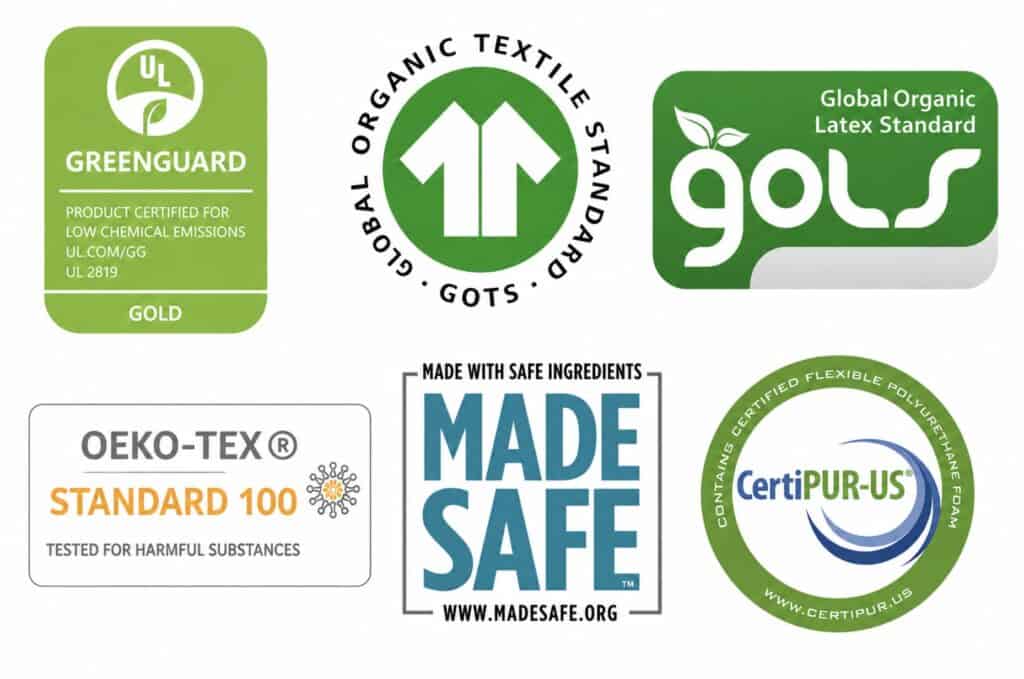
Certifications can make shopping easier when the brand explains what they cover. They are not all the same, so check whether the label applies to foam, fabric, wood, emissions, or the full product.
Helpful labels include:
- GREENGUARD Gold: Tests products for low chemical emissions.
- CertiPUR-US: Applies to flexible polyurethane foam.
- OEKO-TEX Standard 100: Tests textiles for certain restricted substances.
- FSC: Covers responsible wood sourcing, not chemical emissions.
- MADE SAFE: Screens products for certain ingredient concerns.
Some certifications focus on emissions, while others focus on textiles, foam, or sourcing. A certification is most useful when the brand clearly explains which part of the product it applies to.
If the product page relies only on words like “eco,” “green,” or “non-toxic,” ask for the specific material and certification details before buying.
Safer Furniture Next Steps
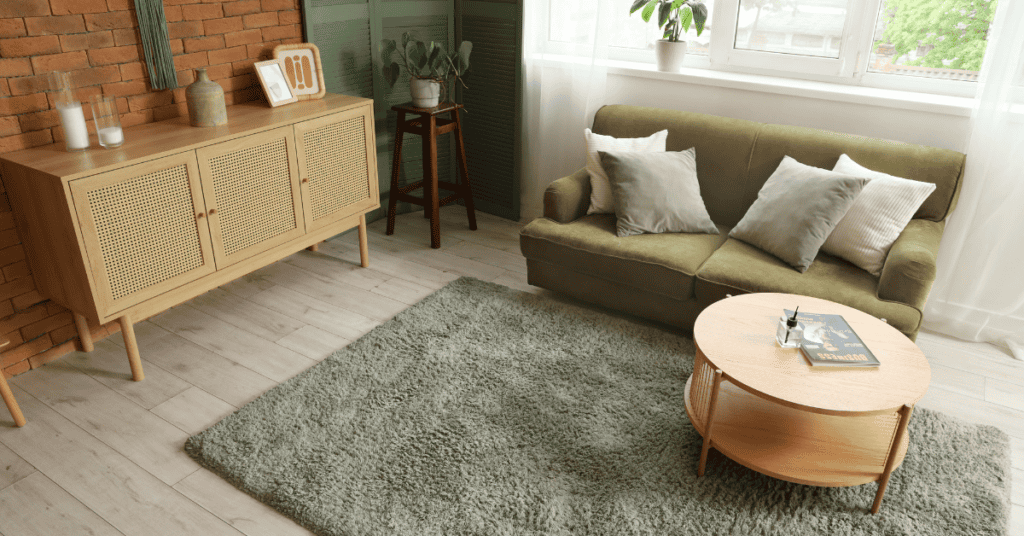
Once you understand the main chemicals used in furniture, the next step is learning how to choose safer furniture materials, fabrics, foam, and finishes with more confidence.
Before buying, check:
- Frame material
- Fabric or surface material
- Foam or cushion fill
- Finish or coating
- Stain, water, or odor treatments
- Certifications and what they cover
If a product page only says “eco-friendly,” “green,” or “non-toxic,” ask for specifics. Broad claims are less helpful than a full material list or a trusted certification.
Clear material details often matter more than broad “natural” or “eco-friendly” marketing claims.